


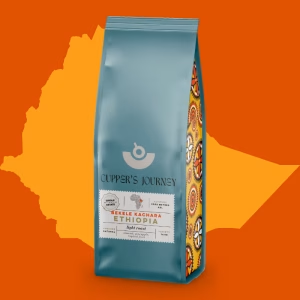
Bekele Kachara Ethiopia
From £14.85 — or subscribe to save 10%
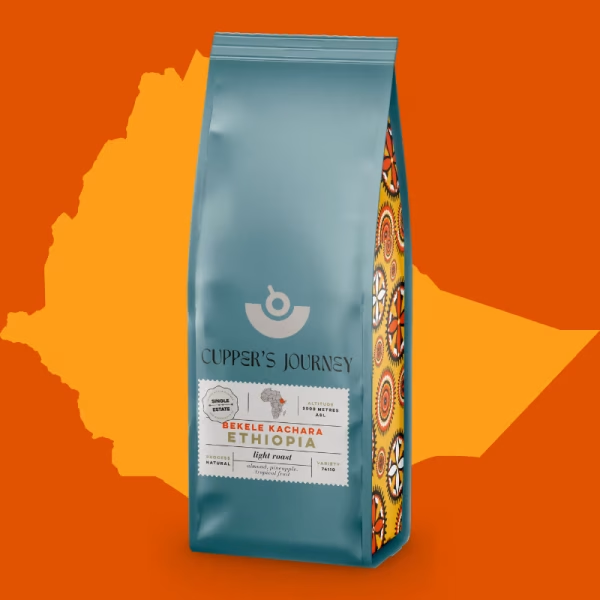
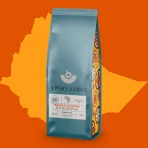
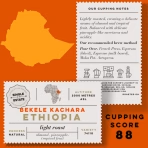
This Bekele Kachara coffee is lightly roasted, creating a delicate aroma of almond and tropical fruit. Balanced with delicate pineapple-like sweetness and acidity.
The cup
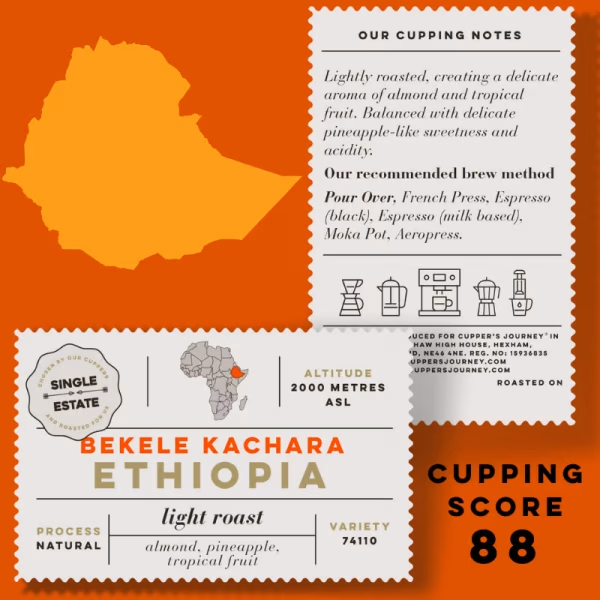
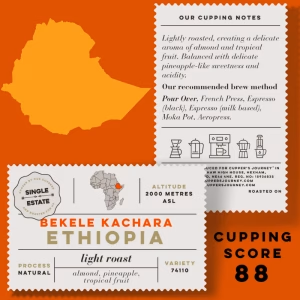
Lightly roasted, creating a delicate aroma of almond and tropical fruit. Balanced with delicate pineapple-like sweetness and acidity.
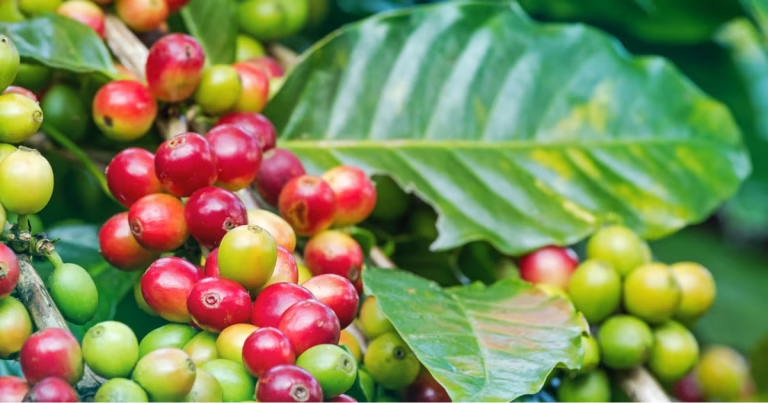
The coffee variety 74110 is a high-quality, disease-resistant Ethiopian heirloom coffee developed in 1974. The berries are renowned for producing coffee with clear, intense floral, citrus and berry notes, a bright, juicy acidity, and a well-balanced body. At this altitude the Ethiopian coffees grow more slowly and have more time to absorb nutrients and develop a robust flavour.
The Producer
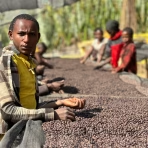
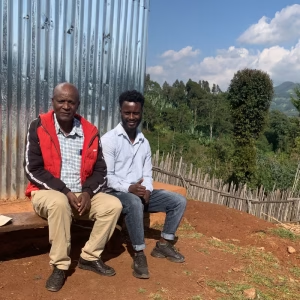
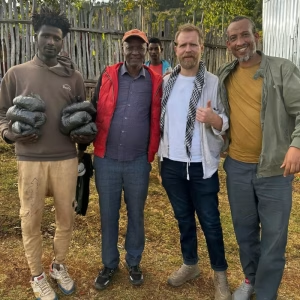
Bekele Kachara has been farming coffee for over 20 years and manages several farms in the Bensa woreda of Ethiopia’s Sidama region. Together with his wife, Abinet Mekonnen, he has 13 children, four of whom are involved in the family’s coffee production. His Murago-area farm is known for its quality-focused approach.
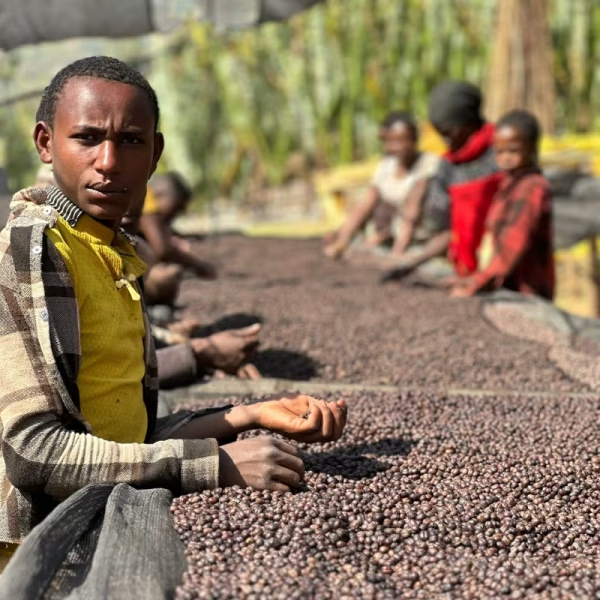
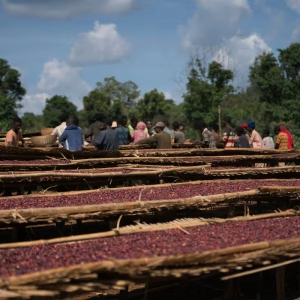
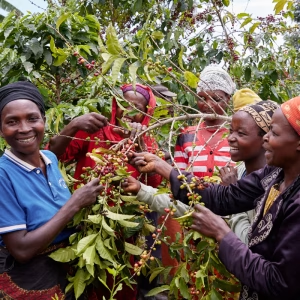
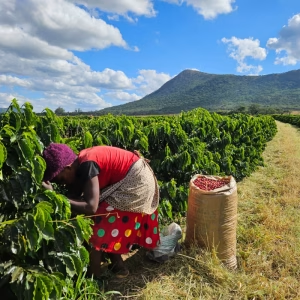
Bekele grows indigenous heirloom varieties #74158, #74112, and #74110 on his 4.5-hectare farm, producing approximately 70 (60 kg) bags of green coffee annually. Coffee is pre-dried on shaded beds, selectively harvested, and managed using organic methods such as compost fertilisation, though the farm is not certified organic due to certification costs. Bekele employs seasonal and daily labourers for harvesting, drying, and transport, and does not own a washing station.
His processing expertise comes from years of experience working with private and cooperative washing stations in the Bensa and Bona districts. Bekele partners with ZEM Coffee, founded by Zele, Emily, and Michael, whose work since the 2013/14 harvest has helped establish Bensa as a globally recognised quality origin.
Through ZEM’s support, individual farms were isolated for export in 2017/18, providing significant financial benefits to producers. In 2019, ZEM introduced Ethiopia’s first Two-Way Transparency Project and distributed 17% of Catalyst Trade profits back to Bensa producers. These efforts, alongside Cup of Excellence recognition, have contributed to the region’s international acclaim, including multiple Good Food and Gold Bean Awards
The country
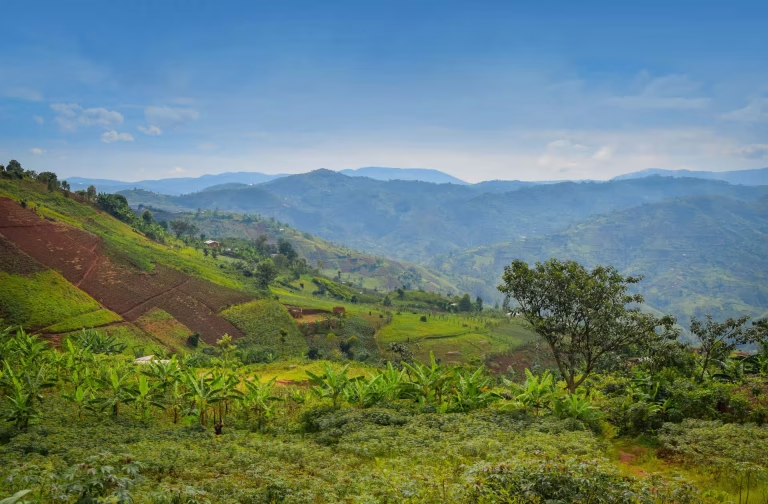
Widely regarded as the birthplace of coffee, Ethiopia’s diverse climates have allowed coffee to develop over centuries, resulting in the greatest genetic diversity of Arabica varieties found in any single country.
In 2019, a referendum in the Sidama zone of the former Southern Nations, Nationalities, and Peoples’ Region (SNNPR) led to Sidama becoming its own geopolitical region. Sidama (also known as Sidamo) is also a long-established coffee classification and flavour profile, recognised globally for producing high-quality speciality coffees. The coffee-growing area spans multiple modern administrative boundaries, including parts of the Oromia Region.
The process
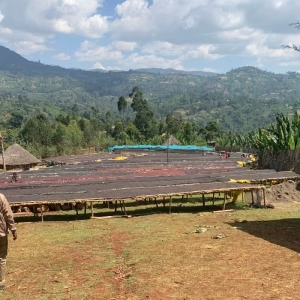
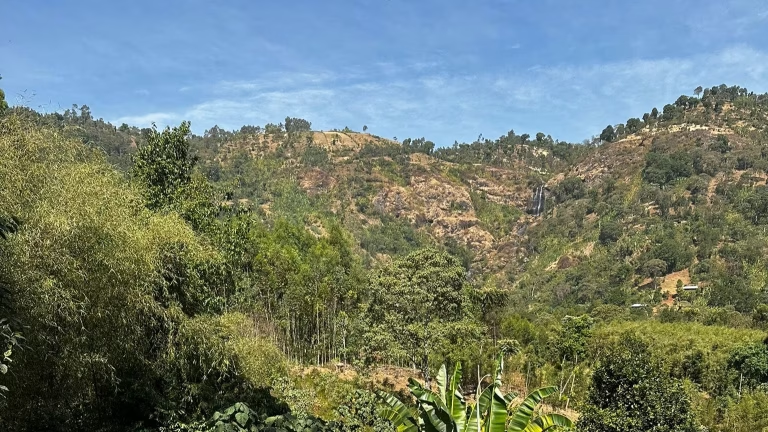
Bekele Kachara began farming in the village of Hache, Sidamo, on land inherited from his parents, later expanding to a second farm in Murago. Across both sites, he grows the 74158 and 74110 varieties under the shade of intercropped fruit trees.
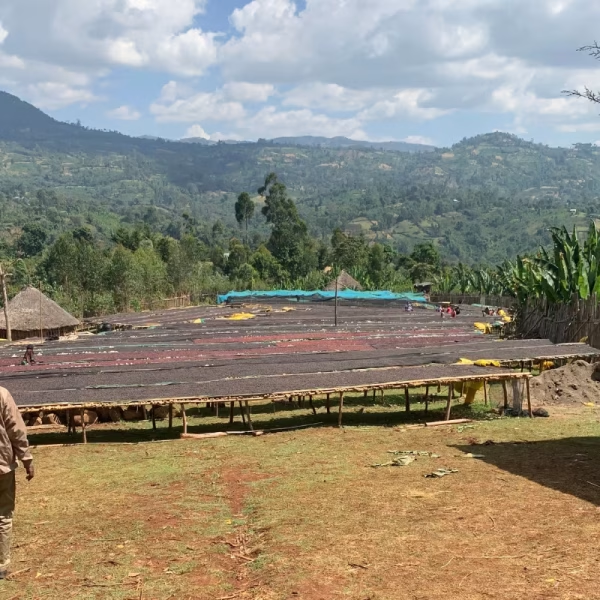
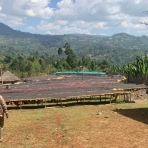
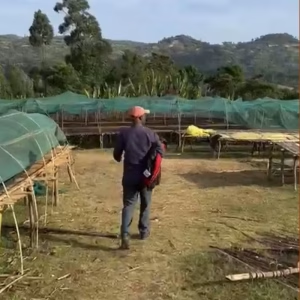
At Hache, the focus is on natural coffees dried on raised beds for 16 days. The Murago farm also produces anaerobic lots and uses an extended drying period of 20–25 days.
The roast
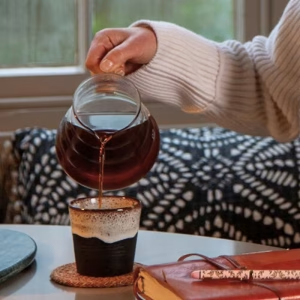
A light touch is all these beans require to enhance their full potential. Be sure to try brewing them as a pour over to do the quality of these beans justice!
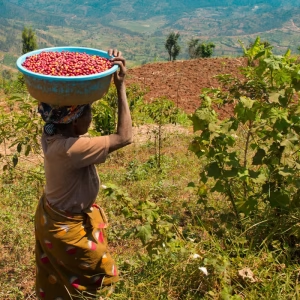
Sourcing: Producer images provided by Mecota Trading & Omwani
| Source | |
|---|---|
| Country | |
| Region | Murago, Sidamo |
| Roast | Light roast |
| Cupping score | 88 |
| Altitude | 2000m |
| Flavour | almond, pineapple, tropical fruit |
| Process | Natural |
| Variety | 74110 |
| Harvest | 2024/25 |
| Lot | 156 |
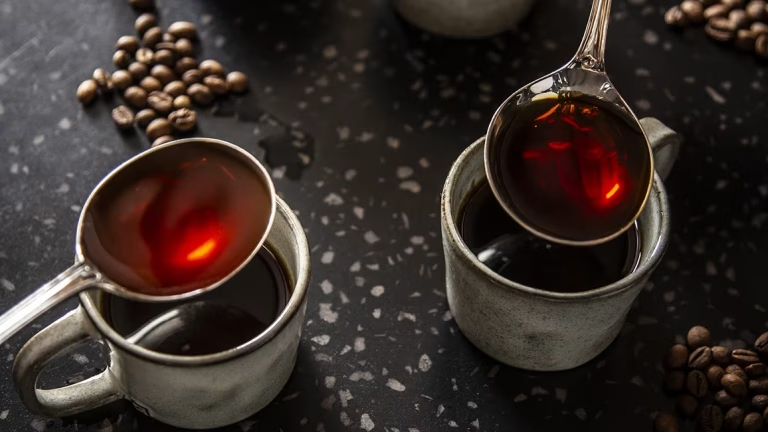
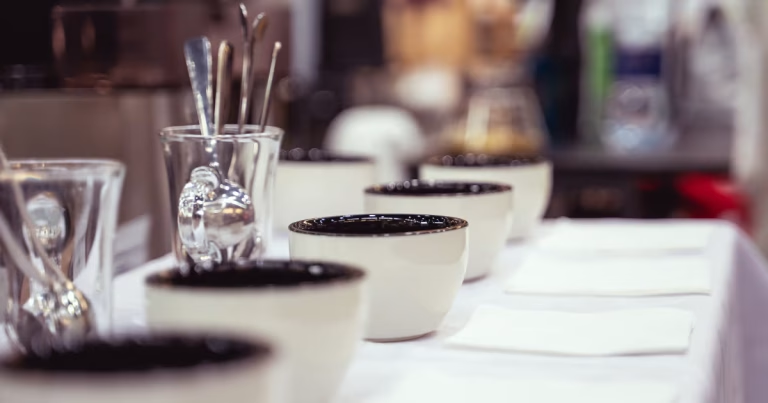
A cupping score is a 100-point metric, established by the Specialtiy Coffee Association (SCA), used by certified Q Graders to evaluate the quality of coffee beans. It measures attributes like aroma, flavour, acidity, body, and balance. The grading is as follows:
Cupping Score | Grade |
|---|---|
90-100 | Speciality – Competition |
85>90 | Speciality – Excellent |
80>85 | Speciality – Very good |
>80 | Commercial/Commodity |
75% of Cupper’s Journey’s coffees are 85+ and any new coffees we stock will all be at least 85.
Read more about it in the Beyond the Bean article:
Once opened and exposed to air, roasted coffee starts to oxidise. The greater the surface area, the quicker this process. This is why we recommend, where possible, that you buy your beans whole and grind to order.
Our coffee comes with the roasted date on pack. We like our coffee to ‘settle’ after roasting for around 2 weeks to ‘de-gas’. The lighter the roast level, the longer the settling period needed. Freshly roasted light coffee is packed with CO₂. Resting allows this gas to escape, reducing acidity and allowing complex flavours (fruitiness, acidity, sweetness) to develop.
We recommend that you consume our beans within 4 months of the roast date following the settling period. That said, coffee beans will easily keep for 12 months if stored correctly.
Coffee should not be stored in the Fridge or Freezer but in an airtight container in a cool dark place. This is because of the increased humidity in the fridge and the condensation that occurs with sharp temperature changes. Coffee absorbs both water and odours so storing it in a fridge will severely impact the flavour and freshness.
To keep your beans (or ground coffee) fresher for longer, store them in an opaque airtight container (remove as much air as possible if you can). Our 250g bags are resealable and have a one-way valve so you can keep your coffee fresh – just expel as much air as possible and zip back up! Then store in a cool dark place like a pantry.
Wherever possible we recommend that you purchase whole bean coffee. Investing in a grinder so that you can grind fresh will have one of the greatest positive effects on the quality of your brew. If that is not an option, then buy smaller bags more frequently in order to maximise freshness.
Our 250g bags have a one-way value that allows CO₂ to escape while keeping the oxygen out and will keep your coffee fresh until opened. This means that you can subscribe to 3x250g bags to get FREE delivery while knowing that the 3rd bag will be as good as the first!
Coffee roast level affects taste: light roasts are bright and floral, medium roasts balanced and sweet, while dark roasts are bold and smoky. We like to allow our speciality African coffees to sing, and to bring out the best of their bright, floral flavours requires a lighter touch. The goal is not to change the bean but to preserve its character. Lighter roasts have bright, crisp, and often complex flavour profiles. These are ideal for pour over brew methods.
Medium roast levels allow the bean’s innate character to mix with the rich, comforting flavours developed during roasting. The sharp acidity you find in lighter profiles mellows out into a smooth, rounded sweetness. The delicate fruit and floral notes evolve into something deeper and more familiar— think toasted nuts, creamy milk chocolate, and rich caramel.
When refining our roast recipe for each individual lot, we cup multiple times until we are happy that we have coaxed the best performance out of the bean. We are strong champions of the pour over method and think that all of our coffees are at their very best when brewed this way.
African Coffee has very complex flavour notes that are affected by the variety of bean, the terroir and the processing techniques. We go into depth about this in the articles below:
Stale coffee typically smells weak, musty, or dull rather than fragrant. When brewed, it tastes flat, cardboard-like, or sour, often lacking acidity. Physically, old beans may appear faded, dry, or have an oil-streaked, rancid surface, while ground coffee feels grainy instead of slightly oily or sticky.
If you use a pour over or French press, you might notice that the ‘bloom’ has gone. The ‘bloom’ is the release of CO₂ gases which occurs when the coffee is fresh. Stale coffee won’t produce this reaction so if you notice a change, it is time for a restock!
Make sure you store your coffees correctly to maintain their freshness for longer.
If you are unsure as to whether you will like the coffee please study the tasting notes as they will give you a clear idea of what to expect. Why not get a Tasting Adventure Pack which allows you to explore samples of three different coffees before you purchase a larger quantity?
Refunds will not be issued for personal taste issues. Please see our refunds and exchanges policy for more details.
-

Halo Beriti Ethiopia
From £14.85 — or subscribe to save 10%Select Options This product has multiple variants. The options may be chosen on the product page -
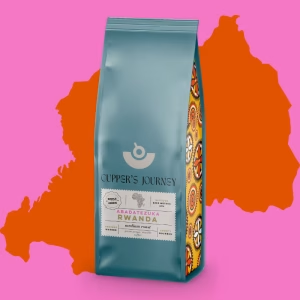
Abadatezuka Rwanda
From £14.85 — or subscribe to save 10%Select Options This product has multiple variants. The options may be chosen on the product page -
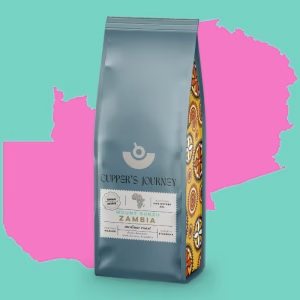
Mount Sunzu Zambia
From £14.85 — or subscribe to save 10%Select Options This product has multiple variants. The options may be chosen on the product page -
Nemba Burundi
From £14.85 — or subscribe to save 10%Select Options This product has multiple variants. The options may be chosen on the product page



Reviews
There are no reviews yet.