


You have come to the right place for quick answers to frequently asked questions. Whether it be about all things coffee, improving your brewing technique or just reasonable questions about how the coffee subscriptions work. This is a great starting point if you are short for time, if you want to go into deeper detail, there is plenty of follow-up reading recommended!
Coffee
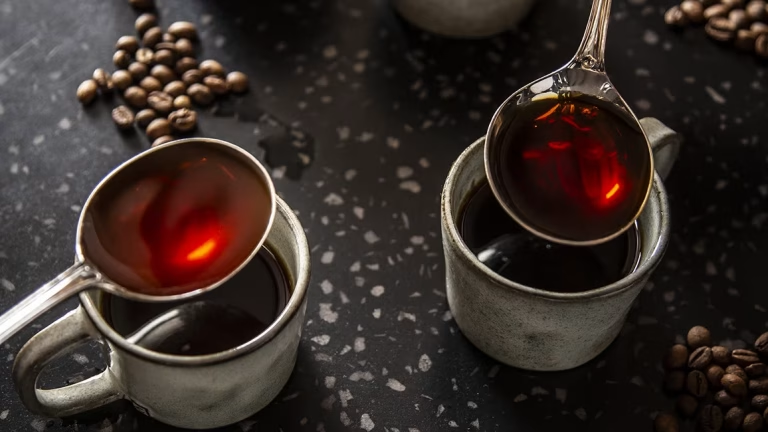
A cupping score is a 100-point metric, established by the Specialtiy Coffee Association (SCA), used by certified Q Graders to evaluate the quality of coffee beans. It measures attributes like aroma, flavour, acidity, body, and balance. The grading is as follows:
Cupping Score | Grade |
|---|---|
90-100 | Speciality – Competition |
85>90 | Speciality – Excellent |
80>85 | Speciality – Very good |
>80 | Commercial/Commodity |
75% of Cupper’s Journey’s coffees are 85+ and any new coffees we stock will all be at least 85.
Read more about it in the Beyond the Bean article:
Once opened and exposed to air, roasted coffee starts to oxidise. The greater the surface area, the quicker this process. This is why we recommend, where possible, that you buy your beans whole and grind to order.
Our coffee comes with the roasted date on pack. We like our coffee to ‘settle’ after roasting for around 2 weeks to ‘de-gas’. The lighter the roast level, the longer the settling period needed. Freshly roasted light coffee is packed with CO₂. Resting allows this gas to escape, reducing acidity and allowing complex flavours (fruitiness, acidity, sweetness) to develop.
We recommend that you consume our beans within 4 months of the roast date following the settling period. That said, coffee beans will easily keep for 12 months if stored correctly.
Coffee should not be stored in the Fridge or Freezer but in an airtight container in a cool dark place. This is because of the increased humidity in the fridge and the condensation that occurs with sharp temperature changes. Coffee absorbs both water and odours so storing it in a fridge will severely impact the flavour and freshness.
To keep your beans (or ground coffee) fresher for longer, store them in an opaque airtight container (remove as much air as possible if you can). Our 250g bags are resealable and have a one-way valve so you can keep your coffee fresh – just expel as much air as possible and zip back up! Then store in a cool dark place like a pantry.
Wherever possible we recommend that you purchase whole bean coffee. Investing in a grinder so that you can grind fresh will have one of the greatest positive effects on the quality of your brew. If that is not an option, then buy smaller bags more frequently in order to maximise freshness.
Our 250g bags have a one-way value that allows CO₂ to escape while keeping the oxygen out and will keep your coffee fresh until opened. This means that you can subscribe to 3x250g bags to get FREE delivery while knowing that the 3rd bag will be as good as the first!
Coffee roast level affects taste: light roasts are bright and floral, medium roasts balanced and sweet, while dark roasts are bold and smoky. We like to allow our speciality African coffees to sing, and to bring out the best of their bright, floral flavours requires a lighter touch. The goal is not to change the bean but to preserve its character. Lighter roasts have bright, crisp, and often complex flavour profiles. These are ideal for pour over brew methods.
Medium roast levels allow the bean’s innate character to mix with the rich, comforting flavours developed during roasting. The sharp acidity you find in lighter profiles mellows out into a smooth, rounded sweetness. The delicate fruit and floral notes evolve into something deeper and more familiar— think toasted nuts, creamy milk chocolate, and rich caramel.
When refining our roast recipe for each individual lot, we cup multiple times until we are happy that we have coaxed the best performance out of the bean. We are strong champions of the pour over method and think that all of our coffees are at their very best when brewed this way.
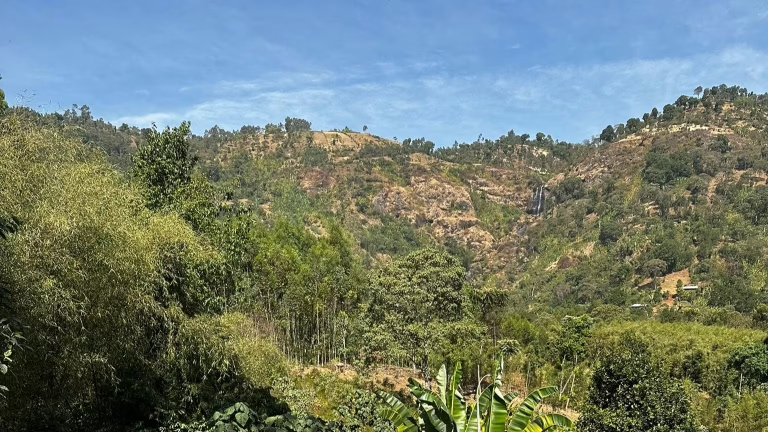
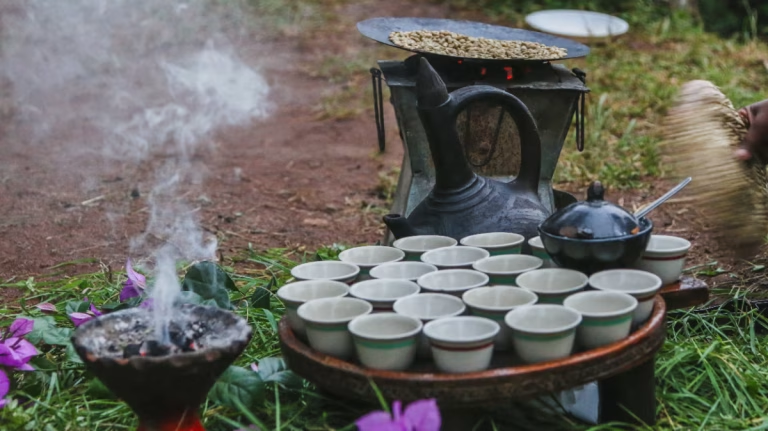
African Coffee has very complex flavour notes that are affected by the variety of bean, the terroir and the processing techniques. We go into depth about this in the articles below:

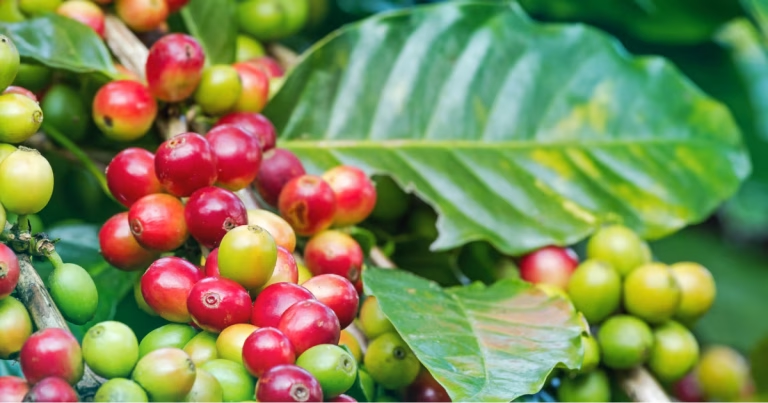
Stale coffee typically smells weak, musty, or dull rather than fragrant. When brewed, it tastes flat, cardboard-like, or sour, often lacking acidity. Physically, old beans may appear faded, dry, or have an oil-streaked, rancid surface, while ground coffee feels grainy instead of slightly oily or sticky.
If you use a pour over or French press, you might notice that the ‘bloom’ has gone. The ‘bloom’ is the release of CO₂ gases which occurs when the coffee is fresh. Stale coffee won’t produce this reaction so if you notice a change, it is time for a restock!
Make sure you store your coffees correctly to maintain their freshness for longer.
If you are unsure as to whether you will like the coffee please study the tasting notes as they will give you a clear idea of what to expect. Why not get a Tasting Adventure Pack which allows you to explore samples of three different coffees before you purchase a larger quantity?
Refunds will not be issued for personal taste issues. Please see our refunds and exchanges policy for more details.
Brewing
Pour over equipment can be very basic, but to improve consistency there are a few more items that are useful. Fundamentally you only require a dripper, such as a V60, and the appropriate filter papers.
To improve the quality and consistency of your pour over, you should also consider:
- Gooseneck kettle (with temperature control)
- Electric scales (such as the Jimmy scales)
- Grinder (such as the Hiroia EDGE Ti Grinder)
If you are making more than one cup, it is nice to have a range server jug to make and serve the coffee in. We do a set that includes a glass V60, jug and filter papers, perfect for manual pour overs. When time is short, we also have an amazing Smart Brewer that can make barista quality pour overs at the press of a button!
If you want to find out more about pour over techniques, read this article:
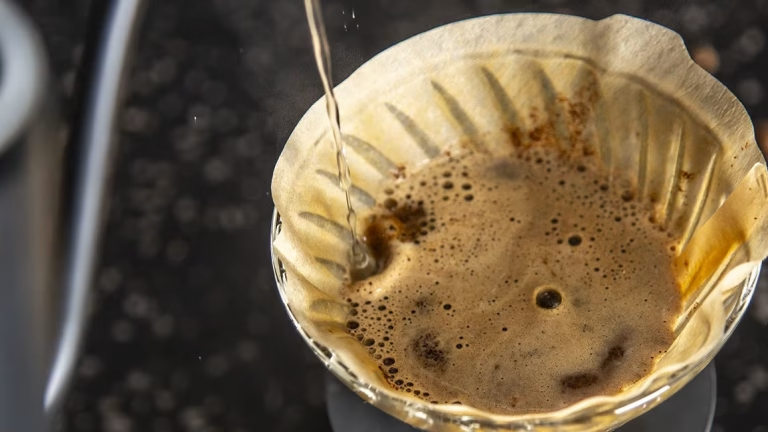
Coffee usually tastes off due to improper extraction—too fast (sour) or too slow (bitter/burnt)—or issues with bean freshness and water quality. Sour coffee is typically under-extracted (needs finer grind/longer time), while bitter/burnt is over-extracted (needs coarser grind/shorter time) or too dark a roast.
Take a look at our article about the Best Brew Methods for African Coffee, where you will find some hints and tips about refining your brew technique:
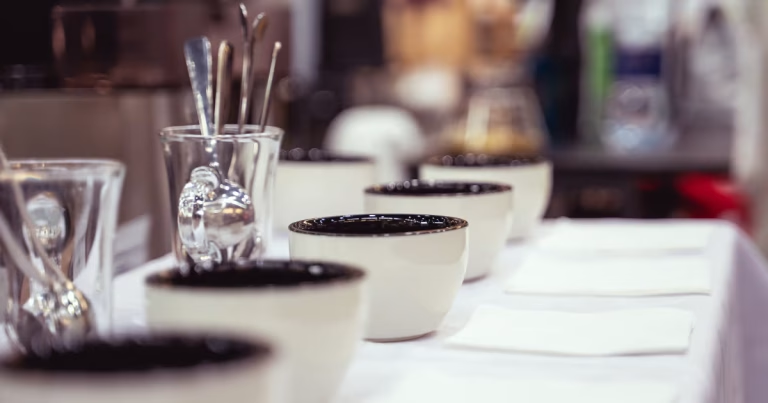
Coffee cupping can be a brilliant way to have fun and learn more about coffee. For a detailed explanation on how to do this, you can read the article in Beyond the Bean on Coffee Cupping.
How to host your own coffee cupping
Coffee cupping experiences are on the rise, but you don’t have to go to an organised event. Find out how to host your own home cupping session
How do you identify the best coffee?
Identifying the best coffee requires farmers to grade and sort rigorously, Q-grade tasters to find the best beans, and roasters to make them sing
Grind size depends on your brew method and the roast level of the beans. Read the article on the Best Brewing Method For African Coffee to find out more
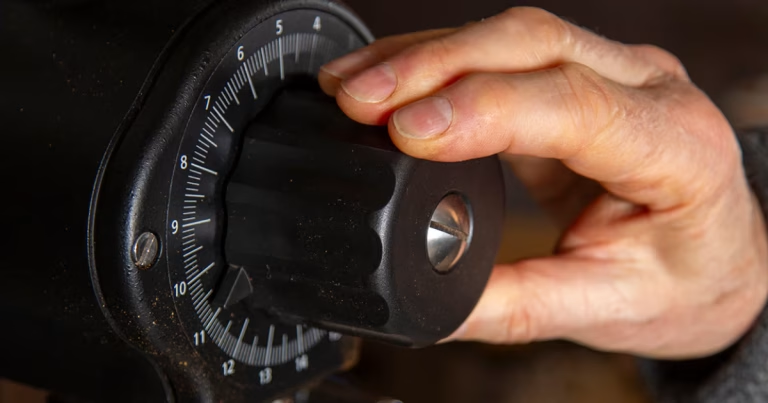
The coffee-to-water ratio varies depending on your brew method. For cupping, it is set at 8.5g:150ml water. Read the Best Brew Methods for African Coffee to work out a good ratio for your preferred drink
Throughout the brewing process achieving an even extraction is key so it makes sense that what you brew should also be an even grind size. This is why you should consider having a burr grinder rather than a blade grinder. The burr grinder has two cutting discs called burrs which will cut beans into even sized pieces and is a great investment for home brewing. In contrast, blade grinders use a spinning blade to chop the beans, creating inconsistent grounds full of dust (known as coffee fines) and boulders.
Hiroia Edge Ti Coffee Grinder
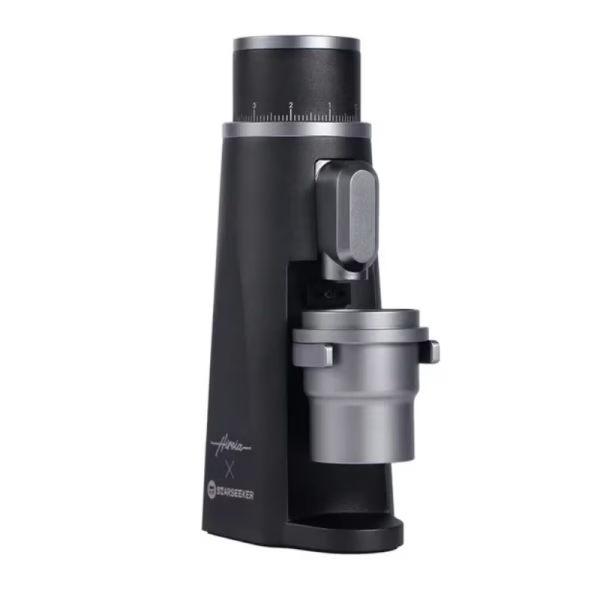
The Hiroia Starseeker EDGE Ti—Electric Burr Coffee Grinder is a fusion of power, precision, and elegance. Crafted with 48mm titanium-coated burrs, it delivers exceptional durability and cutting performance.
While scales are not necessary, if you want to perfect your pour over technique and brew consistent coffee to a set recipe then they are really helpful! We would be lost without our Jimmy Scales
Hiroia Jimmy Smart Scale
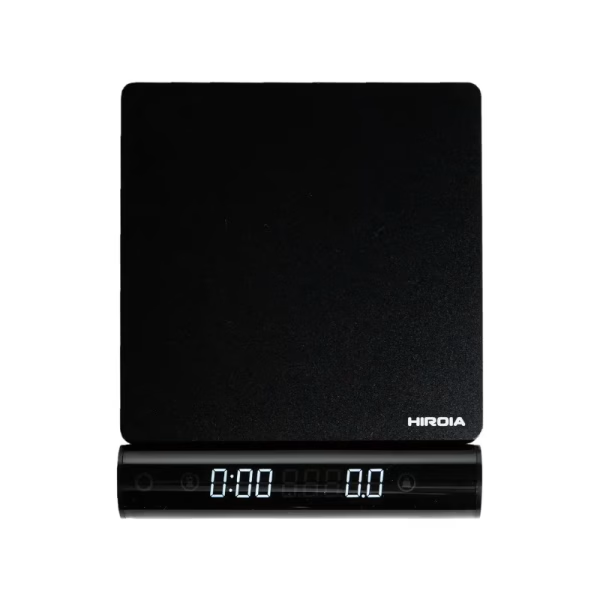
The Hiroia Jimmy Smart Scale is designed for both espresso lovers and pour-over perfectionists. Jimmy blends precision with personality, keeping every cup consistent without taking the joy out of the process.
A gooseneck kettle is a great addition to your manual pour over set-up. The spout allows you greater control as you carefully circle water around your dripper. Getting one that has a temperature control is brilliant to make sure that you are brewing at just the right heat.
The temperature of your water depends on the roast level of your beans as well as your preferred brew method. Lighter roasts are denser and less soluble than darker roasts and so can cope with higher brewing temperatures. Ideally use filtered water but avoid mineral water.
Roast level | Water temperature (°C) |
|---|---|
Light | 92-100 |
Medium | 85-95 |
Medium-dark | 80-90 |
Dark | 80-85 |
Blooming coffee is done by adding a small amount of water to your freshly ground coffee allowing the trapped CO₂ to escape. The process takes 30-45 seconds and you should use 2-3 times the weight of your coffee in water to do this. This CO₂ would otherwise interfere with the extraction process, limiting the contact between the coffee and the water. This is particularly important for pour over brews.

